How do players choose between inside and outside bets?
Players choose between inside and outside bets by weighing payout size against landing frequency, since the two groups trade those qualities in opposite directions. Inside bets cover a few pockets and pay heavily, while outside bets cover many pockets and pay modestly. Layout panels within live roulette btc tables print both groups’ rates openly, so the trade sits in plain figures before any chip moves. Choice never locks a player into one group, either, because every round accepts chips on both sides at once. Session mood, stake size, and preferred pace all pull the decision one way or the other. Reading the groups clearly is the whole skill, and the sections below lay both out.
Bets form two groups
Bets form two groups on every layout, and each group carries its own character.
- Inside picks
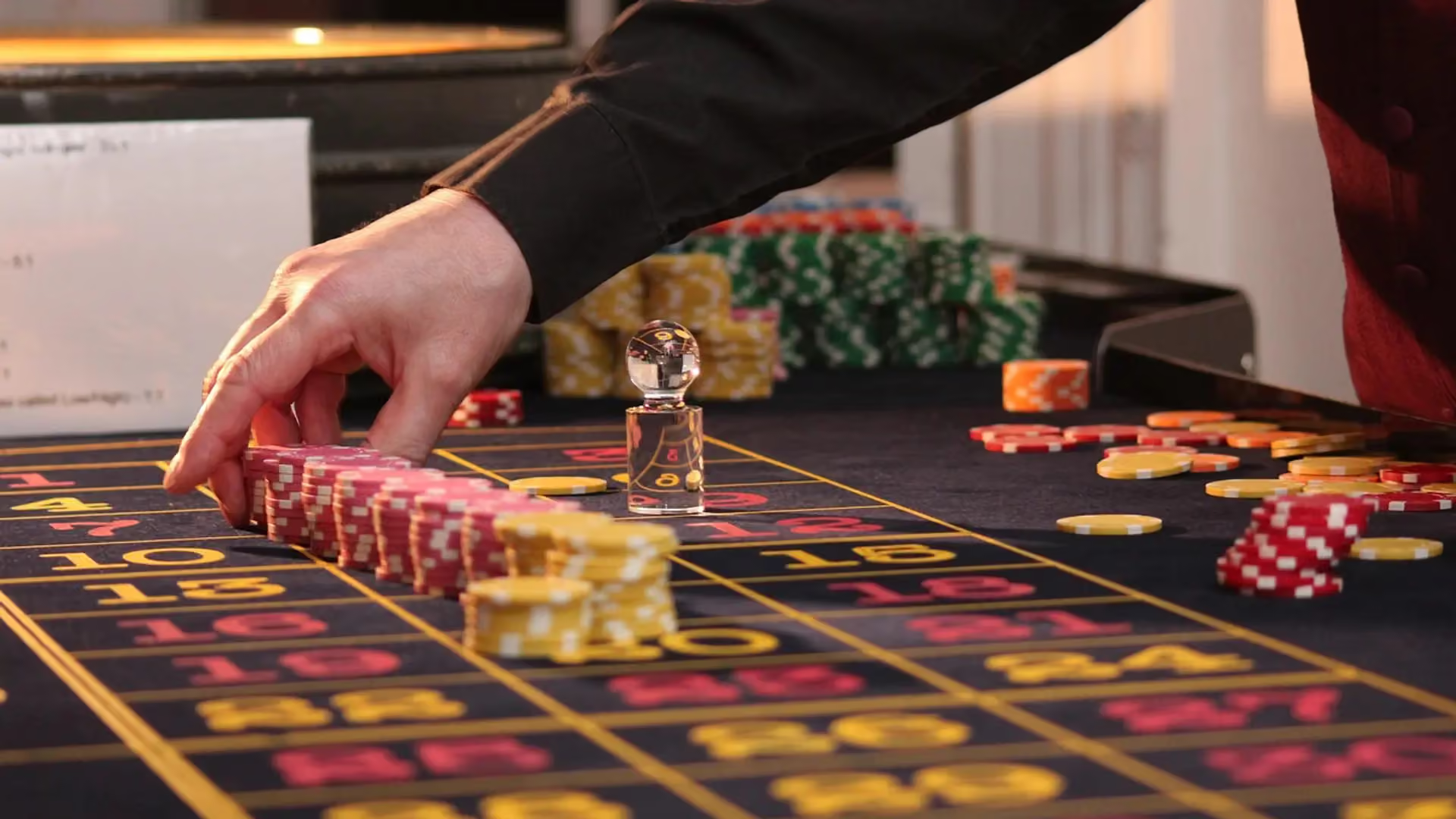
Chips landing on the numbered grid make inside bets, from straight numbers paying 35 to 1 through splits at 17 to 1 and corners at 8 to 1. Coverage stays narrow, with even the widest inside placement touching only six pockets. Landings arrive rarely and pay sharply when they do.
- Outside picks
Chips on the surrounding areas make outside bets, covering red or black, odd or even, and high or low at even money, plus dozens and columns at 2 to 1. Coverage runs wide, with even money picks spanning eighteen pockets. Landings arrive steadily and pay gently.
Two characters that are this distinct mean the groups suit different moments rather than competing.
Three points determine the choice
Three points guide the choice between groups, and each one asks a plain question.
- Pace preference. Steady involvement favours outside picks, while occasional sharp moments favour inside chips.
- Stake comfort. Small chips stretch furthest on wide coverage, and inside picks suit money set aside for rare results.
- Session length. Long evenings pair naturally with frequent modest settlements, while short visits can carry a narrow chase comfortably.
Questions this simple settle most rounds in seconds. Scoreboard reading adds a fourth informal point for some players, though every spin stays independent regardless of history.
Mixing suits most sessions
Mixing suits most sessions better than either group alone, and common combinations show why.
- Anchor plus reach. One even money chip keeps every spin alive while a small straight number adds a sharp possibility.
- Dozens plus corners. Middle coverage from a dozen pairs well with a corner inside the same range.
- Colour plus racetrack. Wide colour chips run beneath neighbour picks that follow the physical wheel.
Combinations let one round carry both characters at once, settling the choice by refusing it. Saved layouts keep favourite mixes one tap away at most tables, and many regulars settle into a signature blend over time. Mixing also teaches both groups faster than playing either alone, since every spin settles wide and narrow chips together for direct comparison.
Choosing comes down to knowing what each group trades away. Inside bets exchange frequency for size, outside bets exchange size for frequency, and three quick questions or one comfortable mix let every player place the round exactly where their evening wants it.