The Role of Animation in Modern Slot Machine Design
The slot machine has come a long way since the late nineteenth century, when Charles Fey invented the Liberty Bell, a mechanical device featuring three spinning reels and a handful of physical symbols. For nearly a century, slot machines relied entirely on physical gears, springs, and levers to function. The player pull triggered a physical rotation, and the entertainment value was tied strictly to the static result of the reels.
The transition to video slot machines in the late twentieth century, followed by the explosion of digital online casinos, completely revolutionized the gambling industry. Today, slot machines are no longer mere mechanical statistics engines; they are highly sophisticated, interactive entertainment platforms. At the absolute center of this digital transformation is modern animation. Far from being a simple cosmetic overlay, animation has become the primary tool that slot designers use to build immersive worlds, communicate complex game rules, celebrate player milestones, and drive long-term user engagement.
The Evolution from Static Reels to Cinematic Narrative
When video slots first emerged, animation was limited by processing power. Early digital games featured crude, two-frame flashing lights or basic pixelated movements when a winning combination landed on a payline. As graphics hardware and software engines evolved, developers realized that animation could transform a repetitive game of chance into a compelling narrative experience.
Modern slot machine design borrows heavily from the worlds of video games and cinematic animation. When a player opens a contemporary slot game, they are frequently greeted by a fully rendered, three-dimensional introductory movie that establishes a storyline, introduces characters, and sets an emotional tone.
Whether the theme centers on an adventurous archeologist exploring ancient ruins, a futuristic space battle, or a mythological realm, animation breathes life into the backdrop. Symbols on the reels are no longer flat drawings; they are dynamic entities that breathe, react, and interact with the player. A character might look directly at the player during an idle spin, celebrate when a near-miss occurs, or point toward a specific bonus trigger, breaking the traditional wall between the consumer and the software.
Psychological Functions of Motion Design in Gameplay
The utilization of motion graphics in modern slots serves specific psychological purposes that are deeply rooted in human behavior and cognitive processing. Designers carefully calibrate the speed, fluidness, and intensity of every movement to shape the player experience.
Managing Game Velocity and Cognitive Pacing
Animation acts as a natural regulator of game tempo. If a slot machine simply displayed winning and losing screens instantly without any transition, the experience would feel abrupt, mechanical, and exhausting.
-
The Anticipation Loop: When two scatter symbols land on the reels, the remaining reels often spin at an accelerated rate while glowing with energy effects. This targeted animation sequence slows down the perceived passage of time, heightening anticipation and signaling to the player that a highly valuable bonus event is close to triggering.
-
The Idle Buffer: Subtle background animations, such as drifting clouds, flickering torches, or floating dust particles, keep the visual environment active even when the player pauses between spins. This continuous motion maintains immersion, preventing the game from feeling broken or static during moments of rest.
Visual Reinforcement of the Payout Hierarchy
Every win on a slot machine is celebrated, but the intensity of the animation must match the mathematical value of the payout. Designers establish a strict visual hierarchy using motion graphics.
-
Minor Wins: A standard, low-paying line hit might trigger a brief, two-second loop where the winning symbols flash, pulse, or bounce slightly to indicate which payline was activated.
-
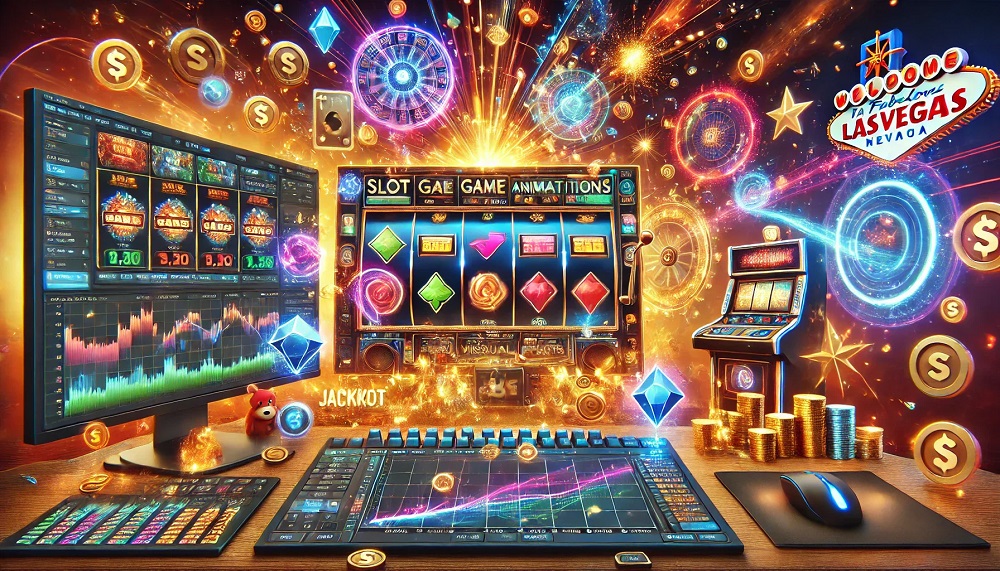
Mega Wins and Jackpots: When a player hits a rare, high-paying combination, the software shifts into a premium cinematic mode. Gold coins erupt from the bottom of the screen, text counters tally the payout with rapid motion effects, and major characters perform complex victory sequences. This explosive visual reward reinforces the emotional impact of the achievement, creating a memorable milestone that resonates with the player.
Communicating Complex Mechanics through Kinetic Design
As modern slot machines move away from traditional grid structures and incorporate highly complex gameplay mechanics, animation has taken on a vital educational role. Without clear visual feedback, players can easily become confused by modern features like cascading reels, expanding wilds, and multi-directional paylines.
Megaways and Dynamic Grid Formats
In slots featuring dynamic reel setups where the number of symbols changes on every single spin, animation is essential for structural clarity. Motion design handles the shifting grid sizes fluidly, expanding or contracting the boundaries of the reels seamlessly before the symbols fall into place. This constant geometric adjustment visually demonstrates to the player exactly how many active paths to victory are available on that specific turn.
Cascading Reels and Cluster Pays
Games that utilize cascading mechanics completely eliminate traditional spinning reels. Instead, symbols fall from the top of the screen like blocks. When a winning cluster forms, animation communicates the mechanical sequence:
-
The specific winning symbols light up and dissolve into particles or explode visually.
-
The remaining symbols fall downward into the empty spaces with realistic physics and weight.
-
New symbols drop from above to fill the gaps, accompanied by motion blurs.
This entire visual loop explains the cause-and-effect relationship of the mechanic instantly without requiring the player to read a lengthy text instruction manual. The player understands intuitively that a single spin can trigger an ongoing chain reaction of payouts.
The Intersection of Software Engines and Performance Optimization
Creating cinematic, high-fidelity animations for modern slots requires a delicate balance between visual quality and technical execution. Because a significant portion of online gambling occurs on mobile devices or via web browsers, slot software must be highly optimized.
Designers utilize advanced game frameworks like HTML5 and specialized animation engines to ensure that complex motions run flawlessly across different hardware profiles. An animation that stutters, drops frames, or lags during a critical spin completely breaks the immersion and can create user anxiety regarding the fairness or stability of the transaction. Therefore, slot developers compress visual assets heavily, utilize sprite sheets, and optimize rendering pipelines so that the transition between standard gameplay and heavy bonus animations occurs instantly, regardless of the user’s device performance.
The Future Landscape of Kinetic Slot Experiences
As the iGaming industry moves forward, the role of animation will only grow more sophisticated. The emergence of Virtual Reality casinos and augmented reality interfaces will require animation to transition from flat screens into true spatial environments. Future slots will feature three-dimensional characters that walk around the player’s physical environment, interactive bonus rounds where the user controls the direction of the animation via hand gestures, and personalized visual engines that adapt their art style based on real-time player preferences. By continuously pushing the boundaries of technology and storytelling, modern animation ensures that the slot machine remains a vibrant, evolving canvas of digital entertainment.
Frequently Asked Questions
What is the mechanical difference between a classic reel spin animation and a video slot cascade?
A classic reel spin animation uses motion blur and looping vertical patterns to create the optical illusion of a physical cylinder rotating around a central axle, adhering to traditional mechanical aesthetic roots. A video slot cascade completely abandons the cylinder concept, utilizing individual physics engines to drop independent asset blocks vertically from off-screen, allowing symbols to bounce, shatter, or interact horizontally with neighboring blocks upon impact.
How do slot designers use color theory within animations to signal bonus triggers?
Designers pair specific animation movement types with distinct color palettes to create instant cognitive recognition. Standard gameplay cycles usually occupy cooler, stable color spectrums like blues and greens with gentle pulsing animations. When a bonus round or scatter sequence approaches, the visual palette shifts dramatically to high-contrast, high-energy colors like bright gold, vibrant purple, and fiery red, combined with rapid, explosive particle paths to alert the user that a premium event is unfolding.
How do losses disguised as wins utilize animation to alter player perception?
A loss disguised as a win occurs when a player wagers two dollars but wins back only fifty cents. Although the net result is a financial loss, the slot machine software triggers positive animation cues, such as flashing lights and small coin bursts, to celebrate the line hit. This kinetic feedback satisfies the human brain’s desire for success, framing the transaction as a minor victory rather than a mathematical deficit, which helps maintain a positive emotional state during extended play sessions.
Why is frame rate consistency critical for the legal integrity of an online slot animation?
If a slot machine’s animation drops frames or stutters during a spin cycle, it can create a cognitive distortion known as the near-miss illusion or lead the player to believe the game is malfunctioning or rigged. From a compliance perspective, the animation must display a perfectly fluid, uninterrupted sequence to ensure total transparency. A smooth frame rate guarantees that the visual representation of the random number generator’s final result is clean, clear, and undisputed by the observer.
What is the purpose of skeletal animation in modern three-dimensional character slots?
Skeletal animation separates a character’s visual surface texture from its underlying digital bone structure. Instead of drawing thousands of individual frame-by-frame pictures for every movement, artists build a virtual skeleton that can be manipulated mathematically in real-time. This technology allows characters to perform highly complex, non-repetitive idle movements, reactive celebrations, and seamless transitions into bonus games while requiring a fraction of the digital file size of traditional video files.
How do ambient background animations prevent user fatigue during long sessions?
Static, unmoving digital screens force the human eye to focus intensely on a fixed surface, accelerating visual fatigue and cognitive boredom. Ethical slot designers integrate slow, non-looping ambient animations into the background, such as swaying foliage, distant shooting stars, or rolling ocean waves. These gentle, low-contrast movements provide the eye with natural micro-diversions, breaking visual monotony and creating a more comfortable, relaxed environment for prolonged engagement.